Collection: Phurba
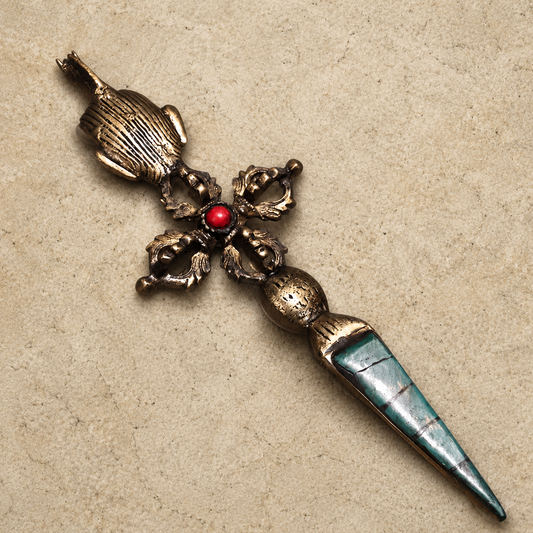
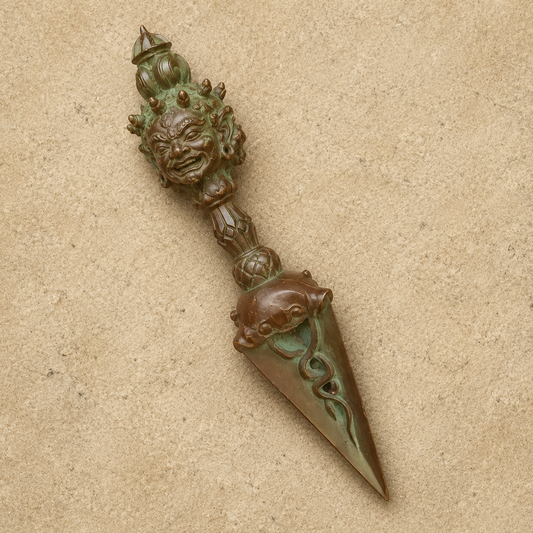
A phurba - also written phurbu, and known in Sanskrit as a kila - is a three-sided ritual implement. In the objects shown here the form is easy to read: a blade with three faces that meet at a point, a central grip, and a pommel at the top. The small versions are made to be worn; the larger ones are made to stand or rest on a surface.
Look first at the blade. Three faces meeting at a single point give the object its characteristic profile, and that profile is what separates a phurba from a single-edged dagger. Then look at the grip: on a pendant it is shortened so the piece hangs close to the body, while on a display object there is room for a longer central section.
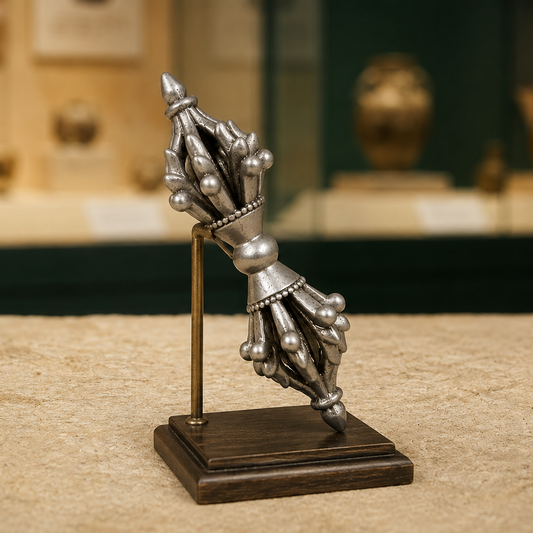
A phurba pendant carries the same silhouette at a smaller scale. Because the shape is narrow, the way it hangs matters - check the loop or bail and the total drop before deciding. A display phurba is judged standing still, so the base, the balance and the front-facing angle do the work.
The pieces in this collection differ in finish, relief and the figures worked into the pommel or grip. Some read as jewellery; others read as a small altar object.
Use the photographs to judge form, finish and relative size, and check the listed item details for the specifics of the piece you are considering.
For cultural context, read our Phurba guide. To compare the pronged scepter form, explore the Vajra & Dorje collection.