
How to Choose an Incense Burner for a Home Altar

The best incense burner for a home altar is not always the most ornate one. It is the one that fits the scale of the room, feels stable on its surface, and supports the atmosphere you want to build. On a small altar, proportion matters more than complexity.
Scale and proportion on a small altar
If the room is compact, a lower and broader burner often feels more settled than a tall or visually top-heavy piece. A small side table or shelf does not need a burner that dominates everything around it. It needs one that gives the altar a center of gravity without turning it into a display contest.
How material changes the mood
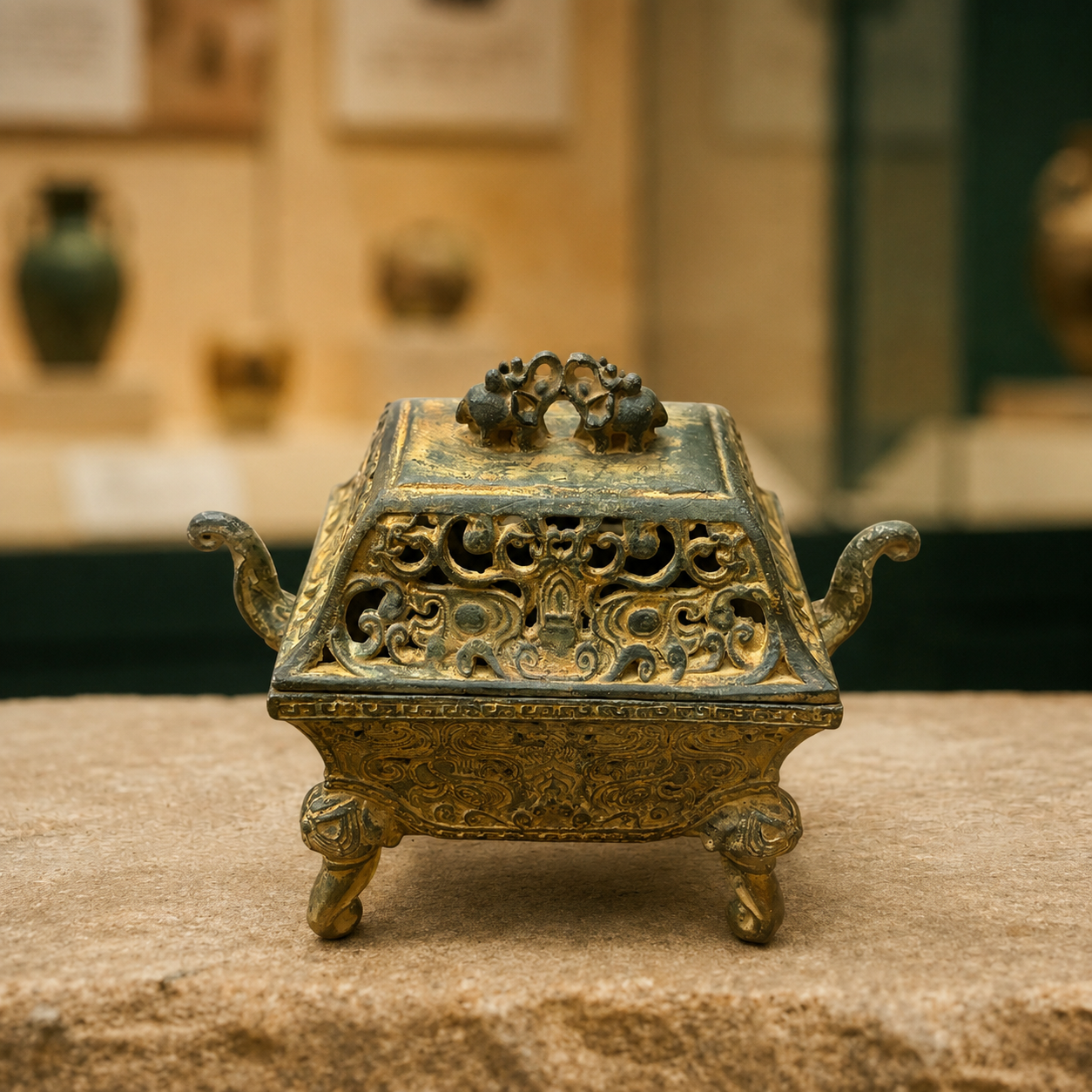
The material of the burner also shapes the mood of the altar. Brass and copper tend to add warmth, depth, and visible age. They work especially well in rooms where you want the space to feel grounded rather than glossy. Relief carving, symbol detail, and patina can add character, but only when the overall form still feels calm.
What sits beside the burner
It also helps to think about what sits beside the burner. If the altar already has a strong figure or prayer wheel, a simpler burner may be the better choice. If the altar is visually quiet, a more sculptural burner can become the piece that gives the arrangement rhythm. Either way, the burner should feel like part of a conversation between objects, not a lone statement.
Stability and cleaning
A burner earns its place by staying put. Check that the base sits flat on the surface you have in mind, and that the rim is wide enough to catch ash rather than letting it spill when the piece is moved. If the altar is on a shelf, leave clearance above the burner so smoke can rise freely.
Cleaning is easier when the shape is simple. A rounded bowl and a smooth rim take a wipe; deep relief and narrow openings hold residue and need a soft brush. Whatever the form, empty the ash regularly and keep the interior dry.
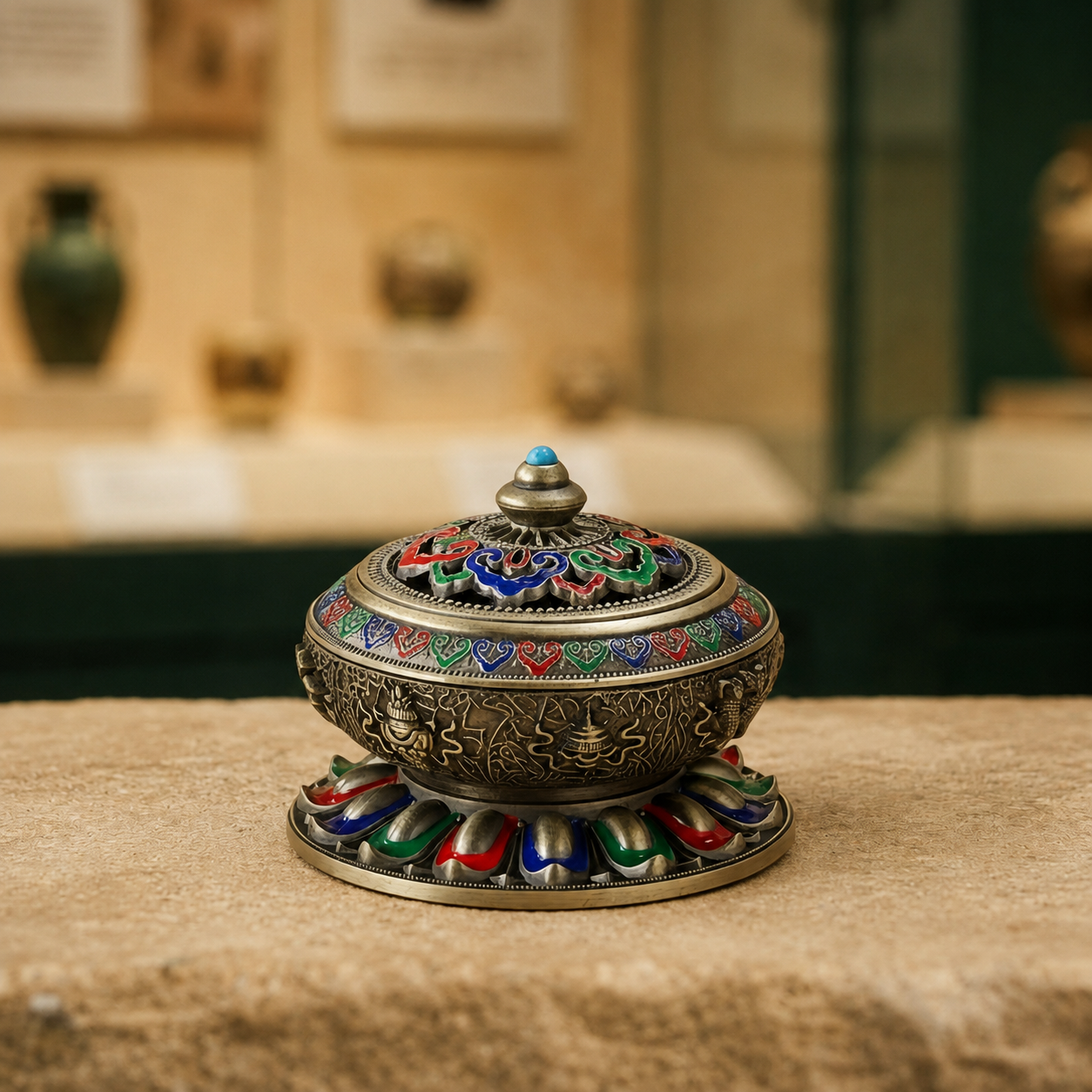
One practical rule helps: choose the burner that would still feel right in the room even when it is not in use. That is how you know it belongs to the space, not just to a moment of ritual.
Choosing by the space you have
Match the burner to the surface before the style. A narrow shelf usually suits a low, wide bowl, while a full table can carry a taller tripod form. The piece should look settled from the angle you actually see it from.
If several objects share the altar, decide which one should lead. The burner can be the grounding element, or it can sit quietly beside a figure that carries the visual weight. Either choice works, as long as the arrangement reads as one space rather than a set of competing pieces.
Related pieces in the collection: the Lotus Incense Burner, Altar Censer and the Lotus Incense Burner, Metal Censer. Browse the wider collection for more.